.png)
.png)
.png)

Todo trader teme a sequência de perdas. Os dias consecutivos no vermelho, a conta diminuindo, a dúvida crescente sobre se tudo isso realmente funciona. Construímos regras em torno das perdas. Estabelecemos stop losses diários. Nos afastamos após três operações ruins seguidas.
Mas pergunte aos traders experientes sobre seus drawdowns mais devastadores — aqueles que os atrasam por meses — e você ouvirá uma história diferente. Os maiores desastres raramente começam com uma sequência de perdas. Quase sempre começam imediatamente após um ganho significativo.
Isso é o Tilt Eufórico (Euphoric Tilt). É mais silencioso que o revenge trading (trading de vingança), mais difícil de reconhecer no momento e, estatisticamente, mais caro ao longo do tempo.
O que é realmente o Tilt Eufórico
O Tilt Eufórico — às vezes chamado de Tilt do Vencedor — é a mudança comportamental que ocorre quando uma forte sequência de vitórias ou um único grande ganho altera sua percepção de risco. O mecanismo é, ao mesmo tempo, psicológico e bioquímico.
Após um ganho significativo, seu cérebro libera dopamina. Isso é sentido como confiança. É sentido como clareza. Você sente que finalmente entende o que está fazendo. O que realmente é, na verdade, uma avaliação de risco deteriorada vestida com o traje da competência.
Isso cria dois efeitos perigosos que se potencializam mutuamente:
-
A Ilusão de Controle. Quando você está perdendo, você é naturalmente cauteloso. Você questiona suas entradas, respeita seus stops e pensa cuidadosamente no tamanho da posição. Quando você está ganhando, essa cautela evapora. Você sente que decifrou o código. O mercado parece legível. Setups que você normalmente deixaria passar, de repente parecem óbvios.
-
O Efeito do Dinheiro da Casa (House Money Effect). Após registrar lucros, você inconscientemente para de tratar esses ganhos como capital real. Eles se tornam “o dinheiro do mercado” — um amortecedor que existe para ser arriscado. É por isso que traders que nunca arriscariam mais de 2% de sua conta em um dia normal, casualmente arriscarão 10% após uma boa manhã. A matemática não mudou. A psicologia, sim.
O resultado é previsível: você começa a assumir setups de menor qualidade com um pior valor esperado, com posições maiores e menos disciplina nas saídas. Você está pressionando o acelerador exatamente no momento em que o mercado não lhe deve nada.
A Anatomia de uma Sessão Eufórica
O padrão segue uma sequência consistente. Entendê-lo é o primeiro passo para detectá-lo cedo.
-
Estágio 1 — A vitória legítima. Você executa um setup limpo que funciona exatamente como planejado. Sua leitura estava correta, sua execução foi disciplinada e o resultado reflete uma vantagem real (edge). Isso é real. Você mereceu.
-
Estágio 2 — A mudança na confiança. Com lucros no placar, seu estado emocional muda. Você se sente mais relaxado. O próximo setup parece mais claro do que provavelmente é. Seu filtro interno de risco está operando com menor sensibilidade.
-
Estágio 3 — A primeira pressão. Você faz uma operação que está ligeiramente abaixo do seu padrão normal. Talvez o setup esteja lá, mas a localização não seja a ideal. Talvez você aumente o tamanho da posição porque já está no verde e “pode se dar ao luxo de devolver um pouco”. A operação perde. Isso parece um pequeno revés, não um sinal de alerta.
-
Estágio 4 — O efeito catraca (Ratchet Effect). Agora você tem uma pequena perda comendo seus lucros, e a dopamina está diminuindo. Você precisa proteger o dia verde. Você faz outra operação para “recuperar a pequena perda”. Depois outra. Cada perda aperta o controle emocional. O que começou como Tilt Eufórico agora está se transformando em revenge trading. A sessão que estava em +$300 às 10:00 fecha no vermelho.
Essa sequência — frequentemente chamada de “viagem de ida e volta” (round trip) — é um dos padrões mais comuns e dolorosos no day trading. Os dados são inequívocos sobre a frequência com que isso acontece e quanto custa.
O que os dados mostram
Quando você analisa os dados comportamentais ao longo de um período completo de trading, o custo do Tilt Eufórico torna-se impossível de ignorar.
O Resumo Comportamental (Behavioral Summary) no Trandence rastreia a Euforia como um padrão distinto: qualquer operação feita após três ou mais vitórias consecutivas. Este é o ponto onde as evidências estatísticas mostram que a qualidade da decisão começa a diminuir e o tamanho da posição começa a se expandir além do que o setup justifica.
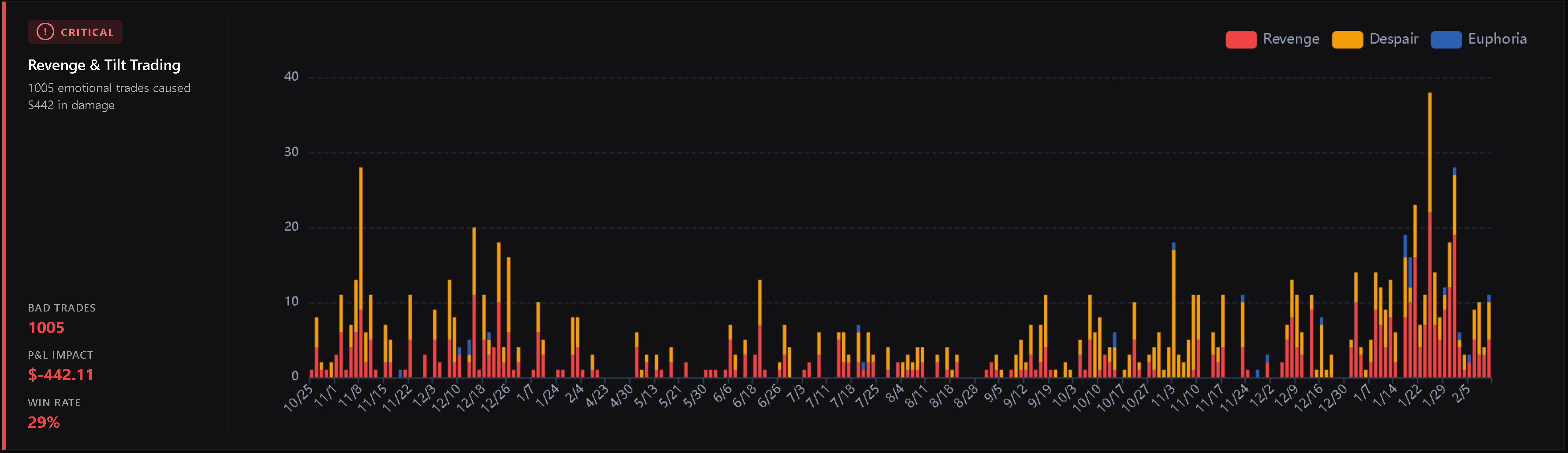
Os números contam a história claramente. Ao longo de um período de trading, operações emocionais — incluindo padrões de Euforia e vingança — representam uma parcela desproporcional das perdas totais. Um trader com uma taxa de acerto (win rate) de 29% e um P&L líquido negativo muitas vezes tem um P&L bruto perfeitamente razoável em operações disciplinadas. A destruição concentra-se nas entradas marcadas como emocionais.
A métrica do Custo do Tilt (Cost of Tilt) torna isso concreto: calcula a diferença exata em dólares entre seu P&L real e o que seu P&L teria sido se você tivesse feito apenas operações disciplinadas e não marcadas. Para muitos traders, esse número é maior que suas perdas totais. A matemática mostra que o problema não é a estratégia deles — são as operações emocionais sobrepostas a ela.
A métrica de Devolução Excessiva (Excessive Giveback) adiciona outra dimensão: qual porcentagem dos seus ganhos intradia máximos você devolve antes do fechamento da sessão? Um trader que atinge um pico de +$300 e fecha em +$80 devolveu 73% de seus ganhos. Quando isso acontece consistentemente, não é má sorte. É um padrão comportamental estrutural chamado Tilt Eufórico.
Como o Trandence detecta a Euforia automaticamente
O automonitoramento manual durante uma sessão ao vivo não é confiável. Quando você está em um estado emocional elevado, sua capacidade de avaliar com precisão seu próprio comportamento é precisamente o que está mais comprometido.
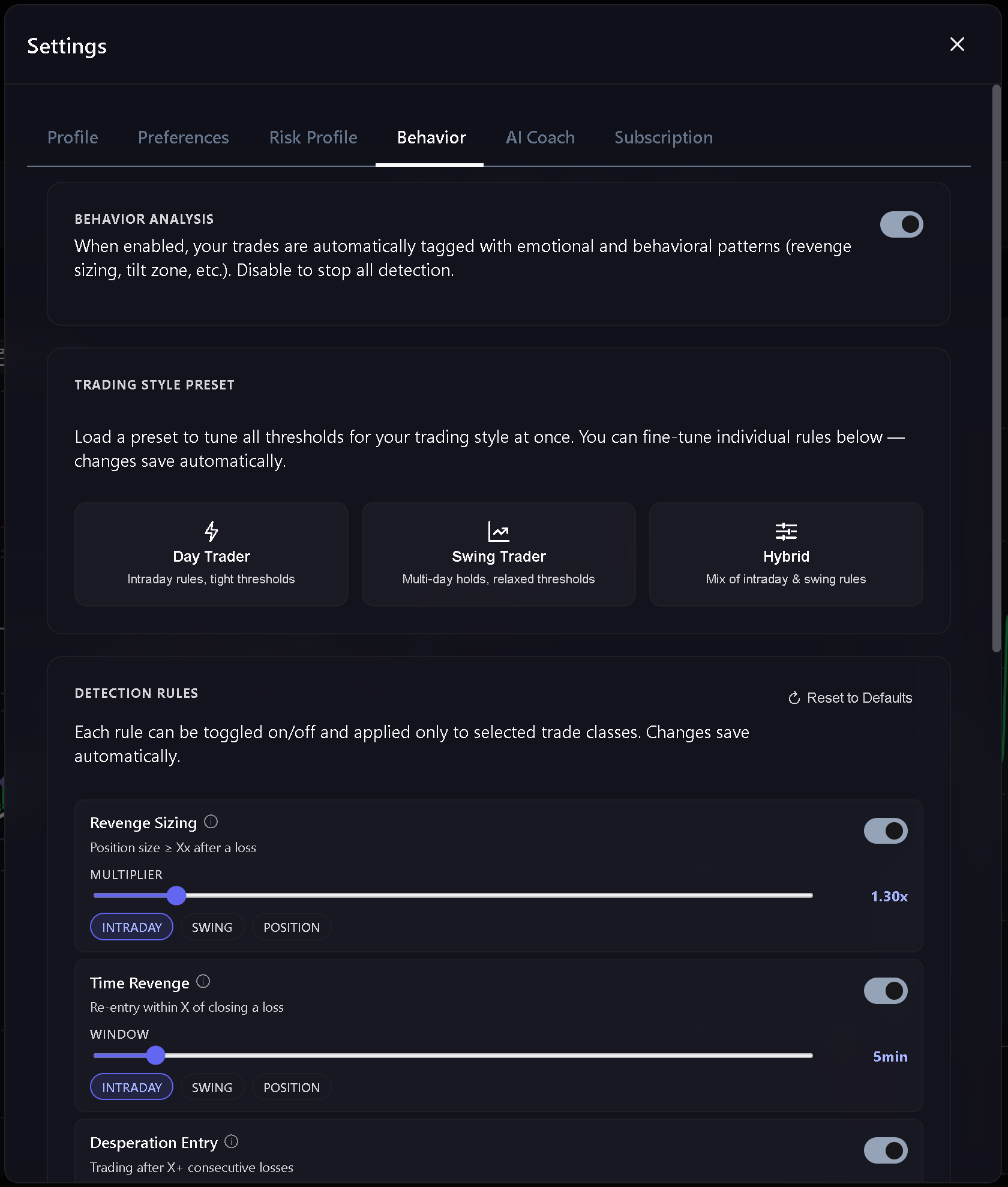
O Trandence rastreia a Euforia automaticamente usando heurísticas comportamentais aplicadas aos dados das suas operações importadas. A detecção é objetiva — observa o tempo, a sequência e o tamanho, não o seu estado emocional autorrelatado.
-
A detecção de Euforia marca qualquer operação feita após três operações vitoriosas consecutivas. O limite é configurável — traders com sequências de vitórias naturalmente mais longas podem ajustá-lo para cima para reduzir falsos positivos. O padrão de três vitórias reflete o ponto onde a pesquisa e os dados empíricos de trading mostram que a deriva comportamental começa a ocorrer.
-
A detecção de Tamanho de Vingança (Revenge Sizing) captura a escalada de tamanho que frequentemente acompanha o Tilt Eufórico — especificamente, quando a exposição em dólares da posição é 1,3 vez ou maior que a da operação anterior. Durante estados eufóricos, os traders aumentam rotineiramente o tamanho sem uma decisão consciente de fazê-lo. O crachá torna o invisível visível.
-
A detecção de Zona de Tilt (Tilt Zone) marca sessões onde o drawdown a partir do pico atingiu 70% do stop loss diário. Este é o aviso estrutural de que uma sessão está em território perigoso — muitas vezes o ponto em que uma manhã vitoriosa está prestes a se tornar um dia perdedor.
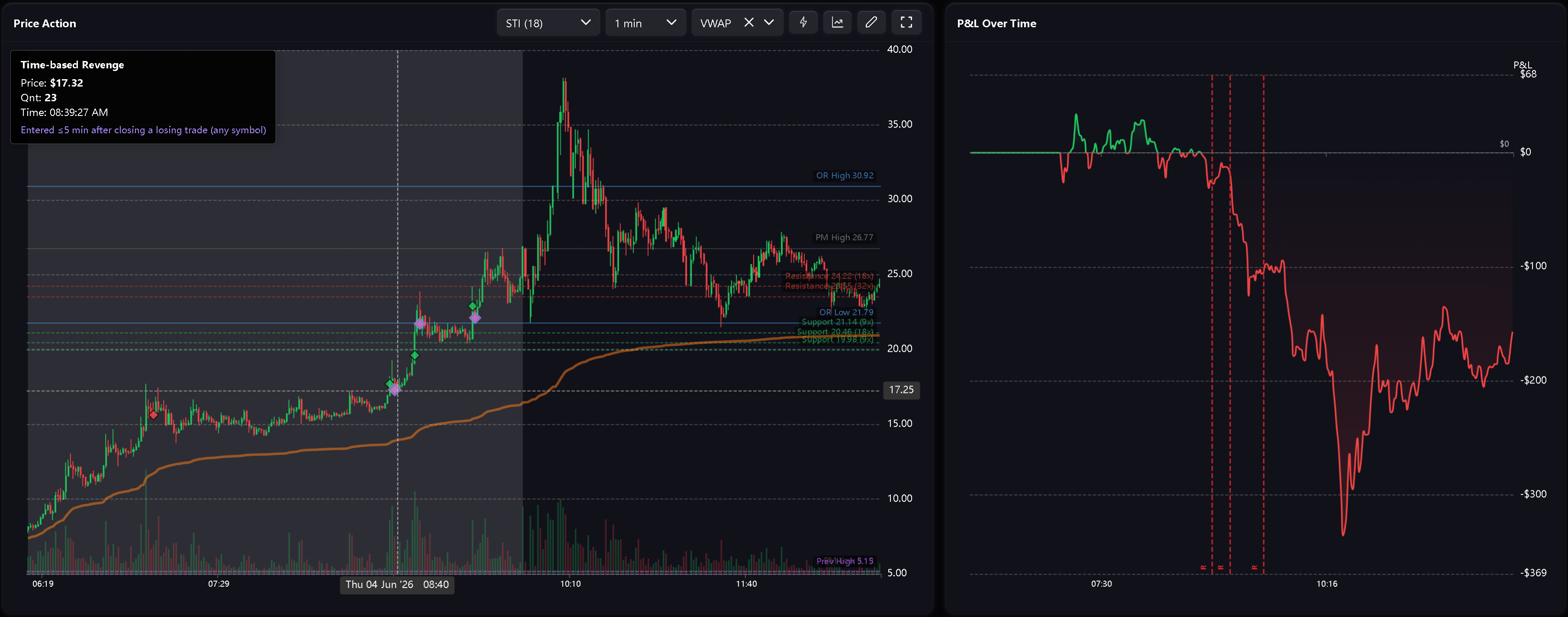
No gráfico de price action, as operações marcadas como Euforia aparecem como marcadores no ponto exato de entrada, sobrepostos aos dados das velas e níveis-chave. Quando você olha para uma sessão onde o Tilt Eufórico ocorreu, o padrão visual é imediatamente reconhecível: um grupo de entradas após o pico da sessão, cada uma ligeiramente pior que a anterior, à medida que a curva de P&L reverte.
As três regras que param a “viagem de ida e volta”
Entender o Tilt Eufórico intelectualmente não é suficiente. O padrão persiste porque opera abaixo do nível de tomada de decisão consciente. Regras escritas com antecedência — quando você está calmo e não em um estado elevado — são a única defesa confiável.
Regra 1: Estabeleça um trailing stop no seu P&L diário.
Você usa stop losses em operações individuais. Aplique a mesma lógica à sua sessão. Antes do mercado abrir, escreva: “Se eu atingir X em lucro, meu fechamento mínimo é Y”. Uma versão específica: se você atingir $300 de lucro, você não deixa o dia fechar abaixo de $150. Quando o P&L cai para $150, a sessão termina, independentemente do que o mercado esteja fazendo.
Essa regra soa simples. É extremamente difícil de seguir no momento porque fechar uma sessão enquanto você ainda está em um estado emocional positivo parece estar deixando dinheiro na mesa. Esse sentimento é o tilt falando, não sua estratégia.
Regra 2: Aplique um filtro de entrada pós-vitória.
Após duas vitórias consecutivas, cada operação subsequente exige uma verificação explícita: “Eu faria este setup exato se estivesse no zero a zero no dia (sem lucro, sem perda, sessão fresca)?” Se a resposta honesta for não, a operação não atende ao seu padrão. É uma operação de euforia.
Escreva esta pergunta em um post-it ao lado do seu monitor. Faça a pergunta em voz alta. O ato de verbalizar interrompe o processamento automático do qual o Tilt Eufórico depende.
Regra 3: Reduza o tamanho após um grande ganho, não aumente.
Isso é contraintuitivo e é exatamente por isso que funciona. Após sua melhor operação da sessão, reduza seu tamanho para as próximas duas operações. Não porque o próximo setup seja pior, mas porque seu julgamento é o mais comprometido logo após um ganho significativo. Um tamanho menor significa dano menor se o padrão de Euforia entrar em ação.
Adicione esta regra ao seu plano antes da sessão começar. “Após qualquer operação única de +$X ou mais, as próximas duas operações serão com 50% do tamanho normal”. Quando a regra é escrita com antecedência, ela remove a decisão do momento emocional.
Construindo o hábito de revisão
As regras acima evitam que o Tilt Eufórico comece. O hábito de revisão evita que ele se repita.
Após qualquer sessão em que você devolveu mais de 50% do seu lucro máximo, abra os dados comportamentais antes de fechar a plataforma. Especificamente:
-
Olhe o registro de data e hora (timestamp) do seu P&L máximo. Identifique a primeira operação feita após esse pico. Verifique se ela carrega um crachá de Euforia. Se sim, rastreie a sequência — quantas operações seguiram antes de você parar? Qual foi o custo total dessas operações? Qual seria o P&L da sessão se você tivesse parado no pico ou na primeira operação marcada?
-
Escreva uma regra específica que teria mudado o resultado. Não uma intenção vaga, mas uma condição específica e mensurável. “Se o P&L cair 30% a partir do pico da sessão, fecho todas as posições e paro de operar por 30 minutos” é uma regra. “Vou tentar não devolver lucros” não é.
Adicione essa regra ao seu modelo de plano diário para que ela se torne parte da rotina pré-mercado. Regras revisadas antes de a sessão começar têm muito mais chances de serem seguidas durante ela.
O padrão geral
O Tilt Eufórico e o revenge trading são frequentemente discutidos como problemas opostos — um desencadeado por ganhar, outro por perder. Na prática, frequentemente aparecem em sequência dentro da mesma sessão. A euforia inicia a “viagem de ida e volta”. Quando os lucros evaporam e as perdas aumentam, o estado emocional muda do excesso de confiança para o desespero. O que começou como pressionar após vitórias torna-se perseguir após perdas.
É por isso que o Resumo Comportamental mostra ambos os padrões rastreados juntos como “Trading de Vingança e Tilt” (Revenge and Tilt Trading). Eles compartilham uma raiz comum: um processo de tomada de decisão que foi capturado pelo estado emocional em vez da estratégia.
A abordagem baseada em dados não elimina as emoções. A dopamina após uma grande vitória é biológica. O que ela faz é criar um registro das consequências comportamentais — operações específicas, custos específicos, sequências específicas — que tornam impossível racionalizar e justificar o padrão. Você não pode argumentar com timestamps e valores em dólares.
Cada crachá de Euforia que aparece no seu diário é uma informação. Ele marca o momento exato onde a disciplina terminou e a emoção assumiu o controle. Usada consistentemente em seu processo de revisão, essa informação torna-se a base de um processo de trading que melhora progressivamente com o tempo.
Ganhar é fácil. Manter seus ganhos é a habilidade.
Pronto para ver seus próprios padrões de Euforia? Comece sua conta gratuita — a detecção comportamental é executada automaticamente em cada operação que você importa.
.png)
.png)